
Low Testosterone After 40: It Isn't Just Your Age
Low Testosterone After 40: It Isn't Just Your Age

Testosterone drifts down about one to two percent a year after 30, but the men whose levels fall fastest are not the oldest ones. Belly fat and insulin resistance, short sleep and untreated sleep apnea, nightly alcohol, and certain medications pull testosterone down far harder than birthdays do, and every one of those can be changed. This is the part of men’s health Dr. Jordan Little spends the most time on at Rayma Health, because a low number is usually a message about the terrain, not a verdict. Here is what the big studies of aging men found, what we test, what we ask men to change first, which two supplements have a real reason behind them, and when testosterone itself is the right tool.
What happens to testosterone as men age
Testosterone is made in the testicles on orders from the brain. It drives muscle, bone, drive, mood, energy, and red blood cell production in men. In healthy men that system gets a little less efficient each decade. The Baltimore Longitudinal Study of Aging followed 890 men for years and measured a steady, age-related decline; by its count, about one in five men over 60, three in ten over 70, and half of men over 80 have total testosterone in the range that counts as low. The Massachusetts Male Aging Study found the same slow slide, around 1.6 percent a year for total testosterone and 2 to 3 percent a year for the free, usable fraction.
That is the slow slide, and it is real. It is also not the part we treat.
The faster drop is the terrain, not the calendar
The European Male Ageing Study looked at 3,200 men aged 40 to 79 and asked what actually predicted a low level. Age lowered free testosterone a little each year. Obesity lowered it a lot: a body mass index over 30 took more off a man’s free testosterone than a decade of aging did, and it did it through a different pathway. The men with belly fat had low or normal signals from the brain, which means the brain was being told to make less. Fat around the middle is active tissue. It converts testosterone into estrogen and drives the insulin resistance underneath all of this.
The same study followed the men for four years and found the effect runs both ways: men who gained weight lost testosterone, and men who lost weight got it back. A meta-analysis of 24 weight-loss studies put a number on it: a low-calorie diet raised total testosterone by about 2.9 nmol/L on average, and the men who lost the most weight rose the most. In men with type 2 diabetes, one in three has a low free testosterone with the same low-brain-signal pattern.
Sleep sits on it too. When researchers put ten healthy young men on five hours of sleep a night for one week, their daytime testosterone fell 10 to 15 percent, which the authors compared to a decade of aging. Untreated obstructive sleep apnea tracks with lower testosterone independent of age and weight, and the drop is clearest in men with severe apnea.
Then the habits. A 2024 meta-analysis of 30 trials found that regular alcohol lowered total and free testosterone and raised estrogen in otherwise healthy men; it was the chronic nightly pattern that did it, not a single drink. Long-term opioid pain medication lowers testosterone by about 165 ng/dL on average, in every opioid class.
An Australian review of older men with low-testosterone symptoms summarized it the way we would: most of these men do not have a disease of the testicles or the pituitary. They have a system that has been suppressed by weight, poor sleep, and medications, and the first-line treatment is to fix those. That is exactly how Dr. Little approaches it.
What we test, and why “normal” is not the target
A single random testosterone draw is close to useless. The Endocrine Society’s guideline, and Dr. Little’s practice, is a fasting draw before 10 a.m., and a low result is repeated on a separate morning before anyone calls it low. Around it he runs:
- Free testosterone and SHBG. Sex hormone-binding globulin rises with age and binds testosterone so it cannot be used; a man can have a normal total and a low free level.
- LH. The brain’s signal to the testicles. Low testosterone with low or normal LH points to the terrain. Low testosterone with high LH points to the testicles themselves, a different problem.
- Estradiol. Belly fat and alcohol push it up.
- Fasting insulin and HbA1c. The insulin resistance underneath the waistline.
- Vitamin D, zinc, thyroid, a blood count, and PSA. The nutrients testosterone depends on, the thyroid that mimics low testosterone, and the prostate and blood-count baselines needed before any treatment.
“Normal” on a lab report runs down to numbers most men feel terrible at, because the range is built from a population that includes a lot of unwell men. We read for optimal, and we read the whole picture. Sometimes the picture says the testosterone is fine and the problem is sleep, or thyroid, or sugar. That is a fine answer, because it is one we can fix.
What to change first
None of these cost anything. All four do more for a man’s testosterone than any bottle on our shelf.
Lose the waist, and put down the nightly drink: this is the one that moves the number most, because the fat and the insulin resistance are the problem. Real protein at every meal, fewer breads, sweets, and beers, more vegetables and good fat, and no food in the three hours before bed. The body listens to what we feed it, and a man’s hormones listen closely. The drink matters separately. Not a glass at a wedding. The two or three every night, which lower testosterone, raise estrogen, and break the deep sleep testosterone is made in.

Sleep seven hours, and find out if you snore: a man makes most of his testosterone while he sleeps. Seven hours is the floor. Dim the lights after dinner, charge the phone in another room, keep the bedroom cold. Then the part men skip: if you snore, wake up unrefreshed, or your wife says you stop breathing, that is sleep apnea until proven otherwise. A home sleep study is one of the highest-yield tests Dr. Little orders for men.

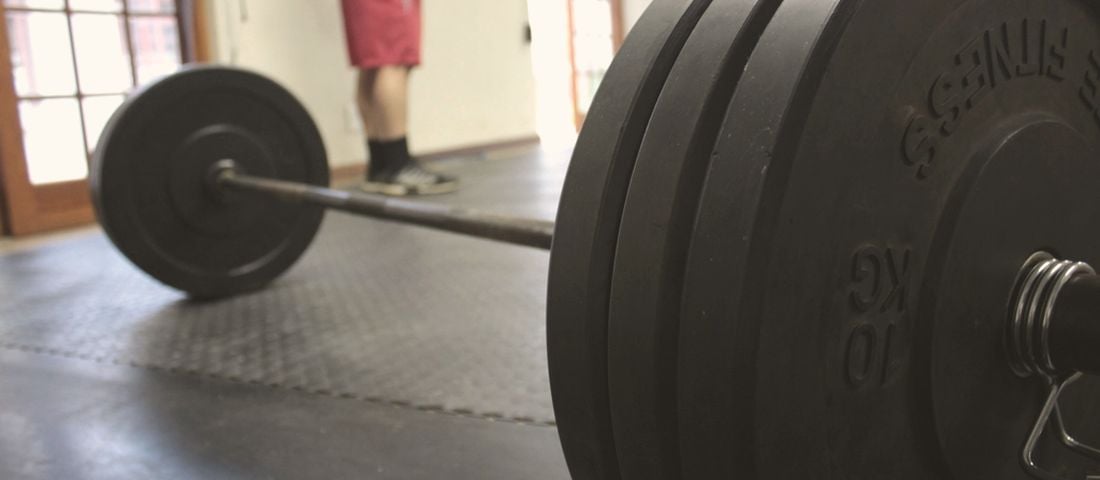
Lift something heavy twice a week, and walk most days: muscle is the tissue that uses testosterone and the tissue that fixes insulin resistance, and after 40 you lose it unless you ask for it. The lifting itself does not move the lab number much; a meta-analysis of exercise trials in men over 60 found resistance training left resting testosterone where it was, while aerobic and interval training raised it a small amount. What moved it in overweight men was moving more: in a 12-week program, the men who walked the most gained the most testosterone, more than the men who cut the most calories. So both. Two days of weights to build the muscle, most days of walking to move the number, and a couple of sessions a week hard enough to breathe heavy. This is the part of the plan Dr. Little, an ultra-distance runner training toward a full Ironman, builds with you in detail, including the back, hips, and knees that have to carry it.
Say it out loud: flat mood, a short fuse, no interest in things that used to light you up. Men file these under stress or age and carry them alone. Mood and testosterone travel together, each pulling on the other, and nobody can sort out which is which from a lab slip. Dr. Little asks the questions that do not fit in a seven-minute visit, and he asks how you are really doing once he knows you. Work, marriage, money, grief, a faith that has gone quiet: all of it lives in the body, and at Rayma it is part of the plan, not an extra.

Two supplements with a reason, and one without
The supplement aisle is full of “testosterone boosters.” Almost none have a human trial behind them. Two do, and there is a reason for each. If you do not need them, keep your money.
Zinc Picolinate, if you are low: the body needs zinc to make testosterone, and men who run short on it run lower. In a classic study, nine older men who were mildly zinc-deficient roughly doubled their testosterone after six months of zinc, and four healthy young men put on a low-zinc diet saw theirs fall by about three quarters. That is a deficiency story, not a booster story. If you are not low, more zinc does nothing for your testosterone and will deplete copper over time. We check a zinc level first and dose to it, for a set time, with a recheck. The men who come up low usually eat little red meat or shellfish, take acid blockers, or drink regularly.
Cortisol Manager by Integrative Therapeutics, for the stressed and under-slept: ashwagandha is the herb with the best trial record for men. In a placebo-controlled study of overweight men aged 40 to 70, eight weeks of a standardized ashwagandha extract raised testosterone about 15 percent more than placebo and raised DHEA, the hormone upstream of it. Cortisol, the stress hormone, is what it works on, and chronic stress is one of the quiet things that keeps testosterone down. Cortisol Manager is the form we use: Sensoril ashwagandha with phosphatidylserine, L-theanine, and magnolia bark, taken at bedtime, built for the man who is exhausted at three in the afternoon and wide awake at eleven. Expect the calmer evenings and better sleep first; the hormone number moves a little. We use it for a season, not forever. Three cautions come with it. Ashwagandha can raise thyroid hormone, so if you take thyroid medication or run overactive, we check levels before and about six weeks in. There are rare reports of liver irritation, so none if you have liver disease, and stop it and call us if your skin or eyes turn yellow or you get itchy. And if you have diabetes, keep an eye on your glucose while you are on it.
Vitamin D, for other reasons: low vitamin D travels with low testosterone, and a small early trial in deficient men saw testosterone rise on it. The larger, better-run trial that followed did not; 12 weeks of vitamin D in men with normal testosterone moved the number by nothing. So we correct low vitamin D for your bones, your muscle, and your immune system, which is reason enough in Minnesota from October to March, and we do not promise it will move your testosterone.
When testosterone itself is the right tool
Some men do the terrain work and still sit low, with the symptoms to match. For them, replacing testosterone is a real option, and Dr. Little prescribes it when it is the right call. In the Testosterone Trials, raising levels in symptomatic men over 65 for a year improved sexual function and modestly improved mood; it did not improve energy or walking distance. A meta-analysis of 27 trials found a small but real easing of depressive symptoms. In older obese men losing weight, adding testosterone preserved muscle and hip bone that the weight loss would otherwise have cost.
The safety question was answered by the largest trial to date. TRAVERSE followed 5,246 men aged 45 to 80 with heart disease or high heart risk for about three years and found no increase in heart attacks, strokes, or cardiovascular death on testosterone compared with placebo. It did find more atrial fibrillation, more blood clots to the lung, more acute kidney injury, and, in a companion analysis, more fractures. That is exactly why it is prescribed with monitoring, not handed out: a blood count, PSA, blood pressure, and estradiol on a schedule, and a dose that puts a man in the healthy range, not above it.
One more thing every man under 50 hears from us: if you may still want children, we do not use testosterone itself. It shuts down your own sperm production. There are other ways to bring the level up that protect fertility, and Dr. Little walks through them with you.
Men’s health at Rayma: Dr. Jordan Little
Dr. Jordan Little, DO is Rayma Health’s osteopathic physician. He trained through the Institute for Functional Medicine and is the American Academy of Osteopathy’s 2026 Resident of the Year. Men’s health is one of the areas he has chosen to focus on: energy, drive, hormones, metabolic health, and prostate wellness. He also brings hands-on osteopathic care for the back, hips, and knees that keep a man off his feet, and the strength and recovery side of the plan. He is an ultra-distance runner training toward a full Ironman, so whatever you are hoping to get back to, he is not going to be surprised by it.
And he listens. He asks the questions that do not fit in a seven-minute visit, explains what he is thinking, and measures success by whether you actually feel and function better, not by whether one number on a report moved.
The visit starts with your story: when the energy changed, what the belt is doing, how you sleep, what you drink, what you take. Then the morning labs above, read to optimal. Then a plan with a reason for every piece of it, in this order: the waist and the drink, the sleep and the apnea question, the weights and the walking, and only then anything in a bottle. We retest in a few months and change what is not working. If something on your list is not earning its place, we stop it.
Men rarely book this visit themselves. They do when someone they love asks. If that is you reading this for him, forward it. If it is you, a first visit with Dr. Little at our Minnetonka office is one morning draw and one unhurried hour.
If faith is part of your life, here is the verse Rayma Health was built on: Be still, and know that I am God. Strength was never only in your shoulders. It is in being the kind of man who takes care of what he has been given.
Frequently asked questions
At what age does testosterone start to decline?
Around 30, at roughly one to two percent a year in healthy men. By the Baltimore aging study’s count, about 20 percent of men over 60 and half of men over 80 have levels that count as low. The faster drops come from weight, sleep, alcohol, and medications, not the calendar.
What causes low testosterone besides age?
Belly fat and insulin resistance are the biggest, and they lower testosterone more than a decade of aging does. Short sleep, untreated sleep apnea, regular alcohol, long-term opioid pain medication, and type 2 diabetes each lower it as well. Most of these suppress the brain’s signal to the testicles, and most reverse when the cause is fixed.
Can losing weight raise testosterone?
Yes. In a meta-analysis of 24 studies, weight loss through diet raised total testosterone by about 2.9 nmol/L on average, and men who lost more weight rose more. The four-year European Male Ageing Study found weight gain lowered testosterone and weight loss restored it.
Does sleep apnea lower testosterone?
Yes. Men with obstructive sleep apnea have lower testosterone than men without it, independent of age and weight, and the effect is strongest in severe apnea. Even one week of five-hour nights dropped daytime testosterone 10 to 15 percent in healthy young men. Snoring plus daytime fatigue is a reason for a sleep study.
How is low testosterone diagnosed?
With symptoms plus a fasting blood draw before 10 a.m., and a low result confirmed on a second morning. Free testosterone, SHBG, LH, and estradiol tell us where the problem sits. We also check fasting insulin, HbA1c, vitamin D, zinc, thyroid, a blood count, and PSA, and we read everything to optimal, not just the lab’s “normal.”
Who sees men for this at Rayma Health?
Dr. Jordan Little, DO. He is an IFM-trained osteopathic physician and the American Academy of Osteopathy’s 2026 Resident of the Year, and men’s health is a focus of his practice: energy, drive, hormones, metabolic health, and prostate wellness, plus hands-on osteopathic care for the back, hips, and knees. Book through the contact page or at (612) 324-6338.
Is testosterone replacement safe?
In the largest trial, 5,246 men with heart risk had no increase in heart attacks or strokes on testosterone over about three years. The trial did find more atrial fibrillation, lung clots, kidney injury, and fractures, which is why it is prescribed with blood count, PSA, blood pressure, and estradiol monitoring. It also shuts down sperm production, so men who may want children use a different approach.
Want the real numbers?
A men's health visit with Dr. Jordan Little is one morning draw and one unhurried conversation. You leave with a plan that has a reason for every piece of it, and we recheck in a few months to make sure it is working.
Educational content, not individual medical advice, and no outcome is promised here. Every plan at Rayma Health is built from your own history, labs, and goals, and the right place to bring these questions is a visit.
Sources
- Harman SM, Metter EJ, Tobin JD, Pearson J, Blackman MR. Longitudinal effects of aging on serum total and free testosterone levels in healthy men. Baltimore Longitudinal Study of Aging. J Clin Endocrinol Metab. 2001;86(2):724-31. PMID 11158037 · doi:10.1210/jcem.86.2.7219
- Feldman HA, Longcope C, Derby CA, et al. Age trends in the level of serum testosterone and other hormones in middle-aged men: longitudinal results from the Massachusetts Male Aging Study. J Clin Endocrinol Metab. 2002;87(2):589-98. PMID 11836290 · doi:10.1210/jcem.87.2.8201
- Wu FC, Tajar A, Pye SR, et al. Hypothalamic-pituitary-testicular axis disruptions in older men are differentially linked to age and modifiable risk factors: the European Male Aging Study. J Clin Endocrinol Metab. 2008;93(7):2737-45. PMID 18270261 · doi:10.1210/jc.2007-1972
- Camacho EM, Huhtaniemi IT, O’Neill TW, et al. Age-associated changes in hypothalamic-pituitary-testicular function in middle-aged and older men are modified by weight change and lifestyle factors: longitudinal results from the European Male Ageing Study. Eur J Endocrinol. 2013;168(3):445-55. PMID 23425925 · doi:10.1530/EJE-12-0890
- Corona G, Rastrelli G, Monami M, et al. Body weight loss reverts obesity-associated hypogonadotropic hypogonadism: a systematic review and meta-analysis. Eur J Endocrinol. 2013;168(6):829-43. PMID 23482592 · doi:10.1530/EJE-12-0955
- Dhindsa S, Prabhakar S, Sethi M, Bandyopadhyay A, Chaudhuri A, Dandona P. Frequent occurrence of hypogonadotropic hypogonadism in type 2 diabetes. J Clin Endocrinol Metab. 2004;89(11):5462-8. PMID 15531498 · doi:10.1210/jc.2004-0804
- Grossmann M. Androgen deficiency in older men. Aust J Gen Pract. 2019;48(7):446-450. PMID 31256511 · doi:10.31128/AJGP-01-19-4831
- Leproult R, Van Cauter E. Effect of 1 week of sleep restriction on testosterone levels in young healthy men. JAMA. 2011;305(21):2173-4. PMID 21632481 · doi:10.1001/jama.2011.710
- Su L, Meng YH, Zhang SZ, et al. Association between obstructive sleep apnea and male serum testosterone: a systematic review and meta-analysis. Andrology. 2022;10(2):223-231. PMID 34536053 · doi:10.1111/andr.13111
- Santi D, Cignarelli A, Baldi M, et al. The chronic alcohol consumption influences the gonadal axis in men: results from a meta-analysis. Andrology. 2024;12(4):768-780. PMID 37705506 · doi:10.1111/andr.13526
- Bawor M, Bami H, Dennis BB, et al. Testosterone suppression in opioid users: a systematic review and meta-analysis. Drug Alcohol Depend. 2015;149:1-9. PMID 25702934 · doi:10.1016/j.drugalcdep.2015.01.038
- Bhasin S, Brito JP, Cunningham GR, et al. Testosterone therapy in men with hypogonadism: an Endocrine Society clinical practice guideline. J Clin Endocrinol Metab. 2018;103(5):1715-1744. PMID 29562364 · doi:10.1210/jc.2018-00229
- Hayes LD, Elliott BT. Short-term exercise training inconsistently influences basal testosterone in older men: a systematic review and meta-analysis. Front Physiol. 2019;9:1878. PMID 30692929 · doi:10.3389/fphys.2018.01878
- Kumagai H, Zempo-Miyaki A, Yoshikawa T, Tsujimoto T, Tanaka K, Maeda S. Increased physical activity has a greater effect than reduced energy intake on lifestyle modification-induced increases in testosterone. J Clin Biochem Nutr. 2016;58(1):84-9. PMID 26798202 · doi:10.3164/jcbn.15-48
- Prasad AS, Mantzoros CS, Beck FW, Hess JW, Brewer GJ. Zinc status and serum testosterone levels of healthy adults. Nutrition. 1996;12(5):344-8. PMID 8875519 · doi:10.1016/s0899-9007(96)80058-x
- Lopresti AL, Drummond PD, Smith SJ. A randomized, double-blind, placebo-controlled, crossover study examining the hormonal and vitality effects of ashwagandha (Withania somnifera) in aging, overweight males. Am J Mens Health. 2019;13(2):1557988319835985. PMID 30854916 · doi:10.1177/1557988319835985
- Björnsson HK, Björnsson ES, Avula B, et al. Ashwagandha-induced liver injury: a case series from Iceland and the US Drug-Induced Liver Injury Network. Liver Int. 2020;40(4):825-829. PMID 31991029 · doi:10.1111/liv.14393
- Sharma AK, Basu I, Singh S. Efficacy and safety of ashwagandha root extract in subclinical hypothyroid patients: a double-blind, randomized placebo-controlled trial. J Altern Complement Med. 2018;24(3):243-248. PMID 28829155 · doi:10.1089/acm.2017.0183
- Pilz S, Frisch S, Koertke H, et al. Effect of vitamin D supplementation on testosterone levels in men. Horm Metab Res. 2011;43(3):223-5. PMID 21154195 · doi:10.1055/s-0030-1269854
- Lerchbaum E, Pilz S, Trummer C, et al. Vitamin D and testosterone in healthy men: a randomized controlled trial. J Clin Endocrinol Metab. 2017;102(11):4292-4302. PMID 28938446 · doi:10.1210/jc.2017-01428
- Snyder PJ, Bhasin S, Cunningham GR, et al. Effects of testosterone treatment in older men. N Engl J Med. 2016;374(7):611-24. PMID 26886521 · doi:10.1056/NEJMoa1506119
- Walther A, Breidenstein J, Miller R. Association of testosterone treatment with alleviation of depressive symptoms in men: a systematic review and meta-analysis. JAMA Psychiatry. 2019;76(1):31-40. PMID 30427999 · doi:10.1001/jamapsychiatry.2018.2734
- Barnouin Y, Armamento-Villareal R, Celli A, et al. Testosterone replacement therapy added to intensive lifestyle intervention in older men with obesity and hypogonadism. J Clin Endocrinol Metab. 2021;106(3):e1096-e1110. PMID 33351921 · doi:10.1210/clinem/dgaa917
- Lincoff AM, Bhasin S, Flevaris P, et al. Cardiovascular safety of testosterone-replacement therapy. N Engl J Med. 2023;389(2):107-117. PMID 37326322 · doi:10.1056/NEJMoa2215025
- Snyder PJ, Bauer DC, Ellenberg SS, et al. Testosterone treatment and fractures in men with hypogonadism. N Engl J Med. 2024;390(3):203-211. PMID 38231621 · doi:10.1056/NEJMoa2308836